Vertical Precision
Wall & Hand Sawing
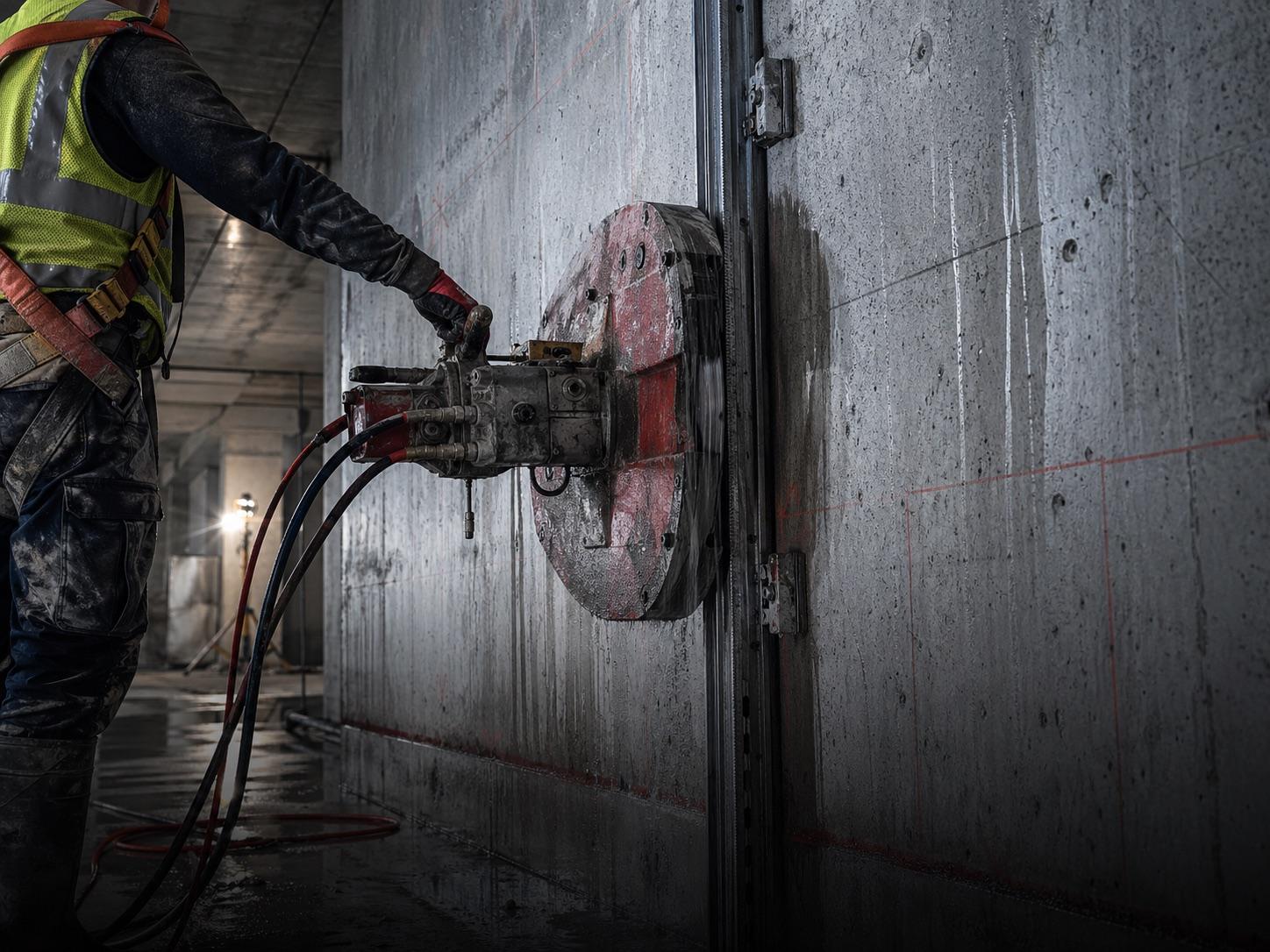
Wall sawing is used to cut reinforced concrete walls and similar vertical surfaces for doors, windows, MEP openings, expansion work, and flush-cut removals. Hand sawing is used where tighter access, finish control, or complex details are required.
Overview
Service BriefVertical and overhead cutting for openings, joints, and structural modifications.
Wall and hand sawing are the precision options for vertical and elevated concrete cuts. They are commonly used when a project needs a new opening, a structural modification, or a removal line that has to stay accurate from top to bottom.
Typical Uses
Field ApplicationsDoor and window openings in concrete walls
Mechanical and utility openings in vertical surfaces
Expansion joint cutting in wall sections
Flush cutting at slabs, ceilings, and adjoining surfaces
Controlled removal of wall panels and sections
Stair, bevel, and specialty cuts where access allows
Process
01
Define the opening and support plan
The cut layout, surrounding conditions, access, and removal sequence all need to be coordinated before the wall saw is set.
02
Cut with a guided system
Track-mounted wall sawing is used because it delivers straighter, cleaner, and more controlled cuts than improvised demolition methods.
03
Coordinate lift-out or follow-up work
A good wall-sawing scope accounts for how the cut section comes out and what trade is inheriting the finished opening.
Deliverables
Defined opening geometry and cleaner edges
A cut plan aligned with lifting, demo, or follow-up framing
Reduced overbreak compared with uncontrolled demolition
Better readiness for steel, glazing, framing, or MEP installation
Cleaner tie-in conditions at the modified structure
Related Services
Read Before You Cut
Scanning
Locate rebar, PT cable, conduits, and embedded hazards before the first cut happens.
Clean Penetrations
Core Drilling
Clean penetrations for electrical, plumbing, HVAC, fire protection, and structural coordination.
Controlled Removal
Selective Demolition
Targeted removal work that protects adjacent structure and keeps sequencing intact.
Next Move
Need wall & hand sawing scoped out?
Send the drawings, access notes, timing window, and the condition that matters most. The cleaner the scope, the faster the field move.